Categories

The Minolta SRT 201 boasts readily available, free PDF instruction manuals online. These guides simplify operation, maintenance, and mastering its features for optimal photographic results.
The Minolta SRT 201 is a precision-built, single-lens reflex (SLR) camera renowned for its ease of use and reliable performance. This model, alongside the SR-T 200 and 202, offers accurate exposure through simple needle alignment in the viewfinder or manual adjustments. Its robust construction and compatibility with the Minolta MC Rokkor lens system make it a favorite among film photography enthusiasts.
The Minolta SRT 201 instruction manual is crucial for unlocking the camera’s full potential. While intuitive, the manual clarifies features, especially for those new to film photography. It details exposure settings, focusing techniques, and troubleshooting, ensuring optimal results. As a combined guide for the 200, 201, and 202, it offers comprehensive support.

The SRT 201’s manual details its body, external controls, compatible Minolta MC Rokkor lenses, and the viewfinder. It aids component familiarity.
The manual thoroughly explains the Minolta SRT 201’s physical construction and operational elements. It details the function of each dial, lever, and button, including the film advance, shutter release, and various settings. Understanding these controls is crucial for proper camera handling and achieving desired photographic outcomes. The guide clarifies how adjustments impact image capture, ensuring users can confidently navigate the camera’s features and customize settings to suit their creative vision.
The instruction manual emphasizes the Minolta SRT 201’s compatibility with the Minolta MC Rokkor lens series. It details the mounting process and explains how these lenses integrate seamlessly with the camera’s features. Information regarding various focal lengths, like the 58mm f/1.4, is often included. Understanding lens specifications and their impact on image quality is vital for photographers utilizing this system.
The SRT 201’s instruction manual dedicates sections to understanding the viewfinder and focusing screen. It explains how to accurately align the needles for correct exposure, a key feature of this camera. The manual details interpreting the split-image rangefinder and microprism collar for precise focusing. Mastering these elements is crucial for sharp, well-exposed photographs.

The SRT 201 manual provides detailed film loading and rewinding instructions. It covers film type selection and a step-by-step procedure for proper film handling.
The Minolta SRT 201 manual details compatible film types for optimal performance. It supports various black and white, color negative, and slide films. Users should select film based on desired photographic effects and lighting conditions. The manual doesn’t specify limitations, implying broad compatibility. Proper film selection ensures accurate exposure and image quality, maximizing the camera’s capabilities. Always consult the film’s ISO/ASA rating for correct meter settings, as detailed within the comprehensive guide.
The Minolta SRT 201 manual guides users through a straightforward film loading process. Open the camera back, insert the film canister onto the spindle, and thread the film leader to the take-up spool. Advance the film and check for proper engagement. Close the camera back, and advance the film several frames, noting the frame counter. The manual emphasizes careful handling to avoid light leaks and ensure correct film transport for consistent results.
The SRT 201 manual details a simple film rewinding procedure. Press the film rewind button on the camera base. Rotate the rewind crank in the direction indicated until you feel resistance, signaling the film is fully rewound. Continue turning slightly to disengage the film leader from the take-up spool. Open the camera back to remove the film canister, ensuring the film doesn’t expose to light.
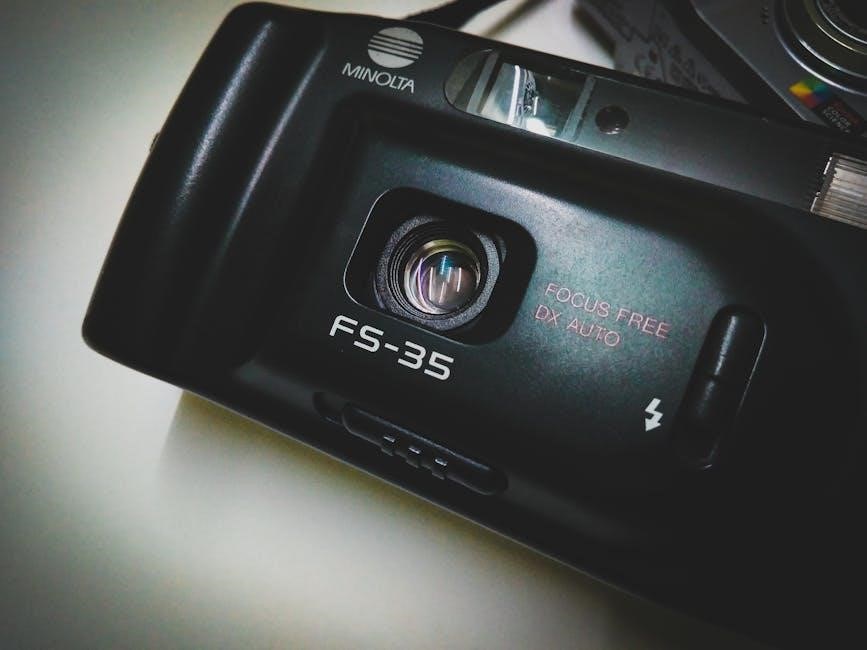
The manual explains aligning viewfinder needles for accurate exposure. Adjust aperture and shutter speed until the needles match, ensuring proper image brightness.
The Minolta SRT 201 manual details how aperture controls depth of field and light intake, while shutter speed governs motion blur. Understanding their interplay is crucial for correct exposure. A wider aperture (lower f-number) creates shallow depth of field and lets in more light, ideal for low-light situations or isolating subjects. Conversely, a smaller aperture (higher f-number) increases depth of field, keeping more of the scene in focus. Shutter speed determines how long the sensor is exposed to light; faster speeds freeze motion, while slower speeds allow for motion blur.
The SRT 201’s unique metering system utilizes a needle alignment within the viewfinder for accurate exposure. The manual explains aligning these needles – one indicating the camera’s measured light, the other representing a standard exposure – ensures proper brightness. Adjust aperture and shutter speed until both needles coincide for a correctly exposed photograph. This system allows for both needle-match metering and manual adjustments, offering versatile control.
The Minolta SRT 201 manual details exposure compensation for challenging lighting situations. When photographing subjects significantly brighter or darker than average, the needle system may require adjustment. The manual guides users to override the meter’s reading, adding or subtracting light to achieve desired results. This ensures accurate exposure in tricky conditions, preventing underexposed or overexposed images, and maintaining creative control.
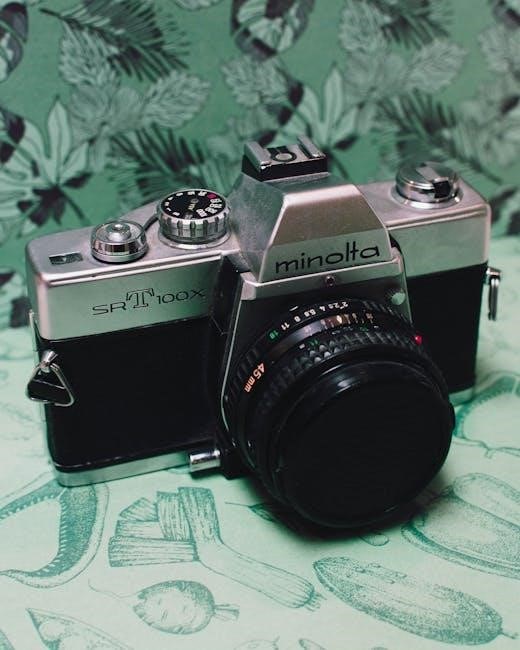
The SRT 201 manual explains utilizing the focusing screen and depth of field control. Precise focusing is achieved through careful screen observation and aperture adjustments.
The Minolta SRT 201’s manual details how to effectively utilize the focusing screen for sharp images. It emphasizes careful observation of the image projected onto the screen, aligning your subject with the microprism collar or split-image rangefinder for accurate focus.
Understanding the screen’s markings and how they relate to depth of field is crucial. The manual guides users through achieving critical focus, especially in challenging lighting conditions, ensuring consistently clear photographs. Practice and familiarity with the screen are key to mastering this technique.
The SRT 201 manual explains depth of field, crucial for controlling what appears sharp in your photos. It details how aperture settings impact this range – smaller apertures (higher f-numbers) yield greater depth of field, keeping more of the scene in focus.
The manual illustrates how to use the lens’s depth-of-field scale in conjunction with the viewfinder markings to visualize the in-focus area at different settings, aiding creative control and ensuring desired sharpness.

The SRT 201 manual details activating the self-timer via a lever. It specifies the duration, allowing photographers to prepare for timed exposures and group shots.
The Minolta SRT 201’s self-timer is engaged by moving the self-timer lever, located conveniently on the camera’s body, to the “S” position. This action initiates a countdown, providing a delay before the shutter release. The manual emphasizes a firm, deliberate movement of the lever to ensure proper activation. After setting the lever, compose your shot and position yourself within the frame, as the shutter will release automatically after the set delay. Remember to gently press the shutter button to start the timer sequence.
The Minolta SRT 201’s self-timer offers a consistent, approximately 10-second delay before the shutter is released. This allows ample time for the photographer to enter the frame for self-portraits or group shots. The manual doesn’t specify adjustable durations; it’s a fixed timing. Understanding this timeframe is crucial for successful self-timed photographs, ensuring you’re positioned correctly before the shutter activates; Plan accordingly to avoid missed shots due to rushing.

The SRT 201 allows flash unit connection for enhanced lighting. The manual details flash synchronization settings, crucial for correctly timed illumination during exposures.
The Minolta SRT 201 manual explains connecting a flash unit to the camera’s hot shoe or using a sync cord to the PC terminal. Proper connection ensures synchronized firing with the shutter. The guide details compatible flash units and necessary adapters. It’s vital to confirm the flash unit’s voltage is safe for the camera’s circuitry, preventing potential damage. Always consult the flash unit’s manual alongside the SRT 201’s instructions for optimal performance and safety.
The Minolta SRT 201 manual clarifies flash synchronization settings, crucial for avoiding dark bands in images. It details the camera’s synchronization speed, typically 1/60th of a second, ensuring the entire film frame is exposed during the flash. Using faster shutter speeds will result in partial exposure. The manual emphasizes selecting the correct setting based on the flash unit and desired photographic effect for consistently well-lit photographs.

The SRT 201 manual aids in resolving exposure and focusing problems. It provides guidance for diagnosing and correcting common malfunctions, ensuring optimal camera performance.
If images are consistently over or underexposed, the manual directs users to check the metering system. Accurate exposure relies on aligning the needles within the viewfinder; the guide details this process.
Incorrect needle alignment indicates a potential issue. Furthermore, the manual explains exposure compensation techniques for challenging lighting scenarios, allowing for manual adjustments to achieve desired results. Referencing the manual ensures proper understanding of aperture and shutter speed interactions.
The Minolta SRT 201 manual emphasizes utilizing the focusing screen effectively for sharp images. It details how to interpret the split-image rangefinder and microprism collar for precise focusing. If difficulties persist, the manual advises checking depth of field control, ensuring sufficient light, and verifying lens compatibility.
Proper technique, as outlined in the guide, minimizes focusing errors and maximizes image clarity.

The SRT 201 manual stresses regular cleaning of the camera body and careful lens care to ensure longevity and optimal performance of your Minolta system.
To maintain your Minolta SRT 201, the manual recommends gentle cleaning. Use a soft, dry cloth to wipe down the exterior, removing dust and fingerprints. Avoid harsh chemicals or solvents, as these can damage the finish. Pay particular attention to the viewfinder window and any crevices where dust might accumulate. A blower brush can help dislodge particles without scratching. Regular, careful cleaning preserves the camera’s appearance and ensures smooth operation for years to come.
The Minolta SRT 201 manual emphasizes careful lens maintenance. Use a soft brush to remove dust, then breathe on the lens surface and gently wipe with a lens cloth in a circular motion; Avoid excessive pressure. For stubborn marks, specialized lens cleaning fluid can be used sparingly. Protect lenses from direct sunlight and store them in a clean, dry place to prevent fungus growth and maintain optimal image quality.
ManualsLib and cameramanuals.org offer free Minolta SRT 201 PDF manuals; Combined SR-T 200/201/202 guides are also accessible for comprehensive support.
These websites are excellent resources for locating the Minolta SRT 201 instruction manual in PDF format, available for free download. ManualsLib provides a direct link, simplifying access for users seeking guidance on camera operation. Cameramanuals.org also hosts the manual, ensuring broad availability. Both platforms offer a convenient way to obtain comprehensive documentation for your classic Minolta camera, aiding in understanding its features and troubleshooting potential issues.
A single PDF manual covers the Minolta SR-T 200, 201, and 202 models, offering comprehensive guidance. Be aware that some sections may not apply directly to the SRT 201, and illustrations might depict features differing from your specific camera. This combined resource provides valuable information on operation, exposure, and maintenance, despite minor variations between models, ensuring a useful reference for owners.
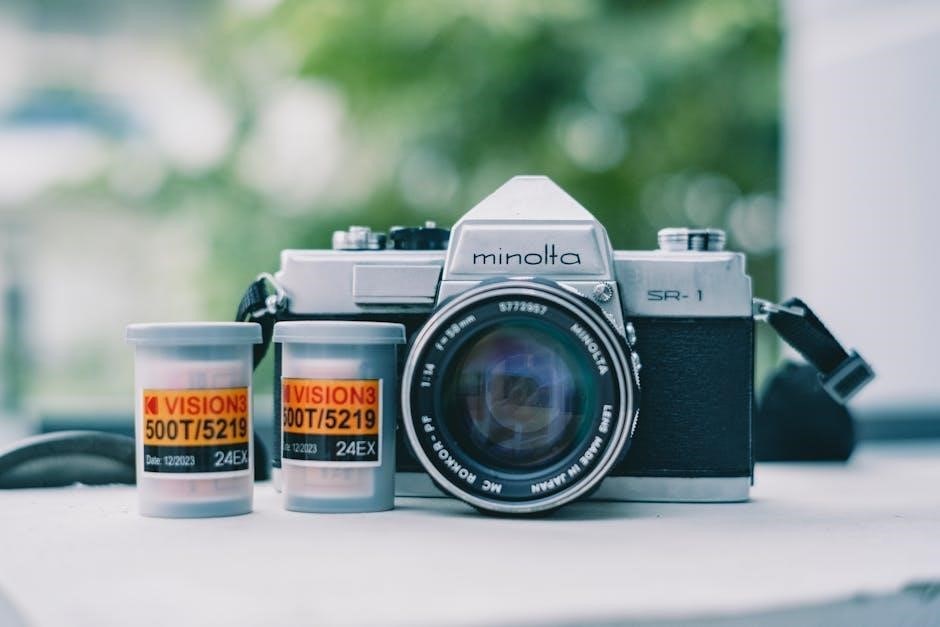
Detailed lens diagrams and specifications for Minolta Rokkor lenses are accessible online, including a 1.26 MB file with optical schemas for various models.
Locating optical schemas for Minolta Rokkor lenses enhances understanding of their construction and performance. A dedicated resource provides a 1.26 MB file specifically containing these diagrams. These schematics are invaluable for enthusiasts seeking detailed insight into the lens design.
Furthermore, resources like those found online offer access to specifications for lenses such as the Macro MD Rokkor 100mm f/3.5, aiding in informed lens selection and usage.
Detailed lens specifications are crucial for maximizing the Minolta SRT 201’s potential. Examining these details, particularly for models like the Macro MD Rokkor 100mm f/3.5, provides insight into optimal usage scenarios and expected image characteristics.
Understanding focal length, aperture, and construction details allows photographers to make informed decisions, enhancing their creative control and achieving desired photographic outcomes with the Minolta system.