Categories
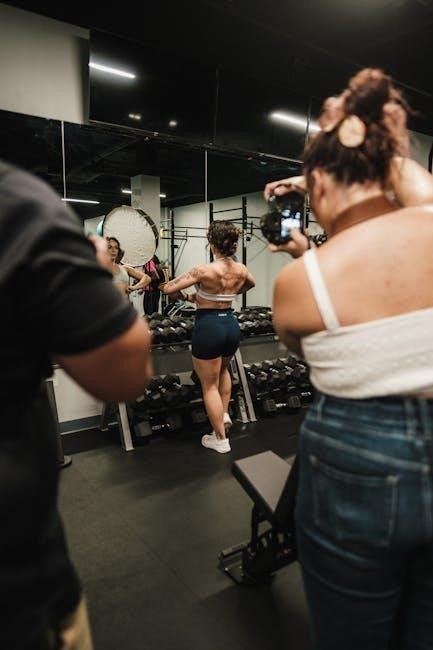
Embarking on a bikini competition journey requires a structured approach, encompassing detailed training, nutrition, and posing practice –
a comprehensive guide is essential for success.
Many competitors benefit from a foundational two-week phase, establishing a training rhythm and building towards a 12-week program.
Resources like Muscle & Fitness Hers and Reddit’s r/bikinitalk offer valuable insights for beginners, covering workout splits and diet planning.
Preparing for a bikini competition is a transformative process demanding dedication, discipline, and a holistic approach. It’s far more than just physical training; it’s a commitment to lifestyle adjustments encompassing nutrition, exercise, and mental fortitude. A well-structured plan, often found in a comprehensive bikini competition prep guide PDF, is crucial for navigating this challenging yet rewarding journey.
The initial stages involve establishing a solid foundation, often a two-week pre-prep phase, to build training consistency and assess current fitness levels. This phase sets the stage for the rigorous 12-week program that follows, focusing on sculpting a balanced physique. Resources like those found on Muscle & Fitness Hers and community forums like r/bikinitalk provide valuable guidance for beginners, offering insights into workout splits and dietary strategies.
Success hinges on understanding that this is a marathon, not a sprint, requiring patience, perseverance, and a willingness to adapt.
A crucial element of bikini competition preparation, detailed within any comprehensive bikini competition prep guide PDF, is a thorough understanding of the judging criteria. Competitors are evaluated on a multifaceted scale, extending beyond mere aesthetics. Judges assess symmetry and proportions, seeking a balanced and harmonious physique. Muscularity and conditioning are vital, demanding a lean physique with defined muscle tone, but avoiding excessive bulk.
However, physical attributes are only part of the equation. Stage presence and presentation are equally important, encompassing confidence, poise, and the ability to showcase the physique effectively. Posing, transitions, and suit selection all contribute to the overall impression.
Mastering these elements requires dedicated practice and a keen awareness of what judges are looking for.
As detailed in a comprehensive bikini competition prep guide PDF, symmetry and proportions form a foundational element of judging. Judges seek a balanced physique where muscle groups harmonize, creating an aesthetically pleasing overall shape. This isn’t about achieving the largest muscles, but rather ensuring they are developed in relation to one another.
Ideal proportions typically involve a specific waist-to-hip ratio, and balanced shoulder-to-waist alignment. Attention to detail is paramount; even slight imbalances can detract from the overall presentation. Achieving symmetry requires a targeted training approach, addressing any lagging muscle groups.
Consistent assessment and adjustments are key to refining physique balance.
A bikini competition prep guide PDF emphasizes that muscularity and conditioning are crucial judging criteria. While not demanding extreme bulk, competitors need defined muscle shape and noticeable separation. This requires a strategic blend of resistance training and a carefully calibrated nutrition plan to reduce body fat.

Judges assess the degree of muscle definition, looking for clear lines and shapes, particularly in the glutes, legs, shoulders, and back. Conditioning refers to the level of leanness achieved, showcasing muscle detail without sacrificing a feminine appearance.
Achieving optimal conditioning is a delicate balance, avoiding excessive depletion or dehydration.
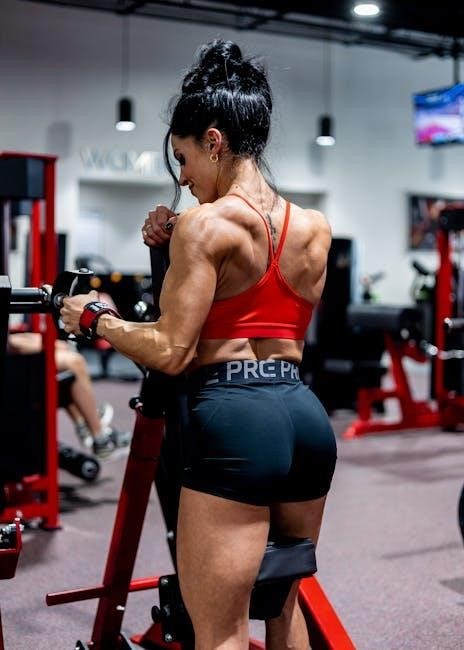
A comprehensive bikini competition prep guide PDF highlights that stage presence is as vital as physical conditioning. Competitors are evaluated on their confidence, poise, and ability to connect with the judges and audience. This encompasses walking with grace, exhibiting a radiant smile, and projecting a captivating personality.
Presentation includes suit selection and how it complements the athlete’s physique, alongside polished posing skills. Transitions between mandatory poses must be smooth and deliberate, demonstrating control and fluidity.
Practicing in front of a mirror and recording oneself can reveal areas for improvement, refining overall stage presence.
A detailed bikini competition prep guide PDF outlines a structured 12-week program, often preceded by a two-week pre-prep phase. This foundational period establishes a training rhythm and prepares the body for the intensity ahead. The 12 weeks are typically divided into three phases: foundation & muscle building, strength & shaping, and peak week & refinement.
Phase 1 focuses on building a solid base, while Phase 2 emphasizes sculpting and defining the physique. The final phase, peak week, involves strategic adjustments to carb intake and water levels to achieve optimal conditioning.
Consistency and adherence to the plan are crucial for maximizing results throughout the 12 weeks.
The initial four weeks of a bikini competition prep guide PDF concentrate on establishing a solid foundation of muscle mass. This phase prioritizes moderate weightlifting with a focus on compound exercises to stimulate overall muscle growth. Training volume is gradually increased, while intensity remains moderate to allow for adaptation.
Nutrition during this phase supports muscle protein synthesis with a slight caloric surplus. Cardio is introduced at a low intensity to improve cardiovascular health without hindering muscle gains.
The goal is to build a balanced physique, preparing the body for the more intense phases to come.

Phase two, detailed in a bikini competition prep guide PDF, shifts towards increasing strength and refining muscle shape. Weightlifting intensity increases, incorporating progressive overload to challenge muscles further. Training splits become more focused, targeting specific muscle groups for enhanced development.
Nutrition transitions to maintenance calories, prioritizing protein intake to preserve muscle mass. Cardio frequency and duration are slightly increased to promote fat loss.
The emphasis is on sculpting a visually appealing physique, enhancing muscle definition and symmetry, preparing for the final stages of competition preparation.
The final phase, outlined in a bikini competition prep guide PDF, focuses on “peak week” strategies for optimal conditioning. This involves precise manipulation of carbohydrates, water intake, and sodium levels to enhance muscle fullness and vascularity.
Training volume decreases significantly to allow for muscle recovery and glycogen replenishment. Cardio is reduced to minimize any potential muscle loss.
Refinement of posing and presentation becomes paramount, ensuring confidence and showcasing the physique effectively on stage. This phase demands meticulous attention to detail and adherence to a carefully planned protocol.

A bikini competition prep guide PDF emphasizes a strength training protocol designed to sculpt a balanced and aesthetically pleasing physique. The focus is on building lean muscle mass, particularly in the glutes, legs, shoulders, and arms, while maintaining overall proportionality.
Training incorporates compound exercises like squats, lunges, and deadlifts for lower body development, alongside isolation movements for targeted muscle shaping.
A balanced approach ensures the entire body is worked, preventing imbalances and promoting a harmonious physique. Proper form and progressive overload are crucial for maximizing results and minimizing injury risk.
A comprehensive bikini competition prep guide PDF prioritizes glute and leg development, recognizing their importance in achieving the desired physique. This focus stems from the judging criteria, which heavily emphasizes lower body shape and symmetry.
Effective exercises include variations of squats (back, front, goblet), lunges (walking, reverse, lateral), hip thrusts, and Romanian deadlifts. These movements target all areas of the glutes and legs, promoting both size and definition.
Progressive overload is key, gradually increasing weight or resistance to continually challenge the muscles and stimulate growth. Proper form is paramount to prevent injury and maximize effectiveness.
A well-rounded bikini competition prep guide PDF emphasizes shoulder and arm sculpting to create a balanced and aesthetically pleasing physique. While not the primary focus, defined shoulders and arms contribute significantly to overall symmetry and presentation.
Effective shoulder exercises include lateral raises, front raises, rear delt flyes, and overhead presses. For arms, prioritize exercises like bicep curls, hammer curls, triceps extensions, and close-grip bench presses.

Moderate weight and higher repetitions are generally recommended to build muscle endurance and shape, rather than bulk. Maintaining proper form is crucial to avoid injury and achieve targeted muscle activation.
A comprehensive bikini competition prep guide PDF highlights the importance of back and core integration for a sculpted and stable physique. A strong back provides a foundation for posing and enhances overall body shape, while a defined core is essential for stage presence.
Effective back exercises include pull-ups (assisted if needed), lat pulldowns, seated cable rows, and back extensions. Core work should be multifaceted, incorporating exercises beyond traditional crunches.
Plank variations, Russian twists, and leg raises are crucial for developing core stability and definition. Remember, a strong core supports proper posture and enhances the visual impact of abdominal work.
A detailed bikini competition prep guide PDF emphasizes cardio’s role in achieving optimal body composition. It’s not just about burning calories; it’s about enhancing conditioning and revealing muscle definition. The key is finding a sustainable approach that complements your training and nutrition.
Low-Intensity Steady State (LISS) cardio, like walking or cycling, is often favored for its accessibility and minimal impact on recovery. High-Intensity Interval Training (HIIT) can be effective, but requires careful consideration to avoid overtraining.
Cardio timing and frequency should be individualized. Many competitors incorporate cardio in the morning on an empty stomach, but listen to your body and adjust accordingly.
A comprehensive bikini competition prep guide PDF highlights LISS cardio as a cornerstone of fat loss. This method involves maintaining a consistent, moderate intensity for an extended duration – think brisk walking, incline treadmill work, or steady cycling.

LISS is favored for its accessibility and minimal stress on the central nervous system, making it ideal for daily implementation without hindering recovery from intense weight training. It effectively burns calories and improves cardiovascular health.
Aim for 30-60 minute sessions, several times a week, adjusting duration based on individual progress and caloric needs.
A bikini competition prep guide PDF often addresses HIIT, but with caution. While effective for calorie expenditure, its high intensity can interfere with muscle recovery, crucial during intense training phases.
Strategic implementation is key: limit HIIT sessions to 1-2 times per week, ensuring adequate rest days afterward. Focus on short bursts of maximal effort followed by brief recovery periods – sprints, burpees, or jump squats are effective choices.
Monitor your body’s response closely; excessive HIIT can lead to overtraining. Prioritize LISS cardio as the primary fat-loss method, supplementing with HIIT for metabolic boosts.
A comprehensive bikini competition prep guide PDF will detail cardio’s role. Frequency typically ranges from 3-6 times weekly, adjusting based on individual progress and body composition goals.
Timing is crucial: avoid performing high-intensity cardio immediately before or after weight training, as it can compromise muscle recovery. Separating sessions by several hours is ideal.
Consider fasted cardio – performing cardio on an empty stomach – to potentially enhance fat oxidation, but listen to your body. Prioritize consistency and find a schedule that fits your lifestyle.
A well-defined core is paramount in bikini competitions, contributing to overall physique aesthetics and stage presence. A detailed bikini competition prep guide PDF will emphasize this.
Essential exercises include crunches and leg raises, targeting the upper and lower abdominal muscles. Plank variations – standard, side, and with leg lifts – build core stability and endurance.
Don’t neglect oblique work, incorporating exercises like Russian twists and bicycle crunches to sculpt the waistline. Prioritize controlled movements and proper form over speed to maximize effectiveness and prevent injury.
Fundamental to a competition-ready physique, crunches and leg raises directly target the abdominal muscles, crucial for achieving a tight, flat stomach as detailed in a bikini competition prep guide PDF.
Crunches effectively work the upper abs, focusing on controlled contractions and avoiding neck strain. Variations like cable crunches or weighted crunches can increase intensity.
Leg raises target the lower abs, requiring core engagement to lift and lower the legs. Hanging leg raises or lying leg raises offer progressive challenges. Proper form is vital for both, ensuring core activation and preventing lower back injury.
Beyond basic planks, a bikini competition prep guide PDF emphasizes plank variations to enhance core stability and endurance. These exercises engage multiple muscle groups simultaneously, crucial for stage presence and overall physique.
Side planks target the obliques, improving waist definition and rotational strength. Incorporate hip dips for added intensity. Forearm planks build isometric strength, demanding sustained core engagement.
Plank jacks and walking planks introduce dynamic movement, challenging balance and coordination. Maintaining a straight line from head to heels is paramount. Consistent plank practice builds a solid foundation for advanced core work.
A bikini competition prep guide PDF highlights the importance of targeted oblique work for achieving a defined waistline. While overall fat loss is key, sculpting the obliques creates the illusion of a smaller waist and enhances the V-taper.
Russian twists, performed with or without weight, effectively engage the obliques. Cable wood chops and side bends offer resistance, promoting muscle hypertrophy.
Focus on controlled movements and avoid excessive twisting, prioritizing form over momentum. Incorporate exercises that challenge the obliques in multiple planes of motion. Remember, oblique work complements, but doesn’t replace, a comprehensive core routine.
A comprehensive bikini competition prep guide PDF emphasizes nutrition as paramount, often constituting 70-80% of the results. Success hinges on a meticulously planned macronutrient breakdown – prioritizing protein for muscle preservation, strategically managing carbohydrates for energy and fullness, and incorporating healthy fats for hormonal balance.
Meal timing and frequency are crucial, typically involving 4-6 smaller meals throughout the day to maintain consistent energy levels and optimize nutrient absorption.
Adequate water intake and electrolyte balance are non-negotiable, supporting metabolic function and preventing cramping. Precise tracking and adjustments are essential throughout the prep process.

A detailed bikini competition prep guide PDF outlines a specific macronutrient strategy. Protein intake typically ranges from 1-1.2 grams per pound of lean body mass, crucial for preserving muscle during caloric deficits. Carbohydrate intake is strategically cycled, starting higher and decreasing as the competition nears, influencing glycogen stores and fullness.
Healthy fats, comprising 20-30% of total calories, support hormonal function and overall health.
Precise tracking using food scales and apps is vital, ensuring adherence to the plan and allowing for necessary adjustments based on progress and individual needs.
A comprehensive bikini competition prep guide PDF emphasizes consistent meal timing and frequency to optimize nutrient absorption and maintain stable energy levels. Typically, competitors consume 5-6 smaller meals throughout the day, spaced approximately 2-3 hours apart.
Prioritizing protein with each meal is essential for muscle preservation. Carbohydrate timing is often strategically aligned with workouts, maximizing glycogen replenishment.
Consistent timing helps regulate insulin sensitivity and supports fat loss. Adhering to a structured schedule minimizes cravings and promotes adherence to the overall nutrition plan.
A detailed bikini competition prep guide PDF highlights the critical role of hydration and electrolyte balance, especially during intense training and dietary adjustments. Initially, maintaining adequate water intake – often over a gallon daily – is crucial for metabolic function and fullness.
As competition nears, strategic water manipulation is often employed during peak week, but this requires careful monitoring. Electrolyte balance, particularly sodium and potassium, is vital to prevent cramping and maintain muscle function.
Supplementation may be necessary to replenish lost electrolytes, ensuring optimal performance and a polished physique.
A comprehensive bikini competition prep guide PDF emphasizes that posing isn’t merely about displaying physique, but showcasing it effectively. Mastering mandatory poses – front, back, and side – is paramount, demanding consistent practice to highlight symmetry and muscularity.
Smooth transitions between poses are equally important, creating a flowing and aesthetically pleasing presentation. Suit selection plays a key role; competitors should choose a suit that complements their physique and adheres to competition guidelines.
Presentation includes confidence, stage presence, and a genuine smile – all contributing to a winning impression.
A detailed bikini competition prep guide PDF stresses the critical importance of mastering mandatory poses. These typically include the front pose, showcasing overall symmetry; the back pose, highlighting glute and back development; and side poses, revealing waist definition and proportions.
Precise execution is key – competitors must understand the specific angles and muscle contractions required for each pose. Consistent practice in front of a mirror, and ideally with feedback from a coach, is essential.
Focus on hitting each pose with confidence and control, presenting a polished and aesthetically pleasing physique to the judges;

A comprehensive bikini competition prep guide PDF emphasizes that seamless transitions between mandatory poses are just as crucial as the poses themselves. Judges evaluate how smoothly and confidently competitors move on stage.
Practice flowing from one pose to the next, maintaining posture and a consistent presentation. Avoid abrupt movements or awkward pauses. Focus on creating a visually appealing and graceful sequence.
Record yourself practicing transitions and analyze your performance, identifying areas for improvement. Smooth transitions demonstrate control, poise, and a polished stage presence, significantly impacting scoring.
A detailed bikini competition prep guide PDF highlights the importance of suit selection, emphasizing that it should complement your physique and enhance your stage presence. Choose a suit that flatters your proportions and showcases your hard-earned muscle definition.
Consider color and style carefully; classic cuts and colors often work best, allowing your physique to take center stage. Ensure a secure and comfortable fit to avoid distractions during posing.
Presentation matters – maintain confident posture and a radiant smile while showcasing your suit. A well-chosen and confidently presented suit can significantly elevate your overall score.
A comprehensive bikini competition prep guide PDF details peak week, the final seven days before the show, crucial for achieving optimal conditioning. This phase involves precise manipulation of carbohydrates, water, and sodium to maximize muscle fullness and minimize water retention.
Carb cycling is a common technique, strategically adjusting carbohydrate intake to deplete and then reload glycogen stores. Water manipulation aims to reduce subcutaneous water, enhancing muscle definition.
Sodium adjustments are delicate; reducing sodium can further decrease water retention, but must be carefully managed to avoid cramping. Final training adjustments involve reducing volume to allow for recovery.
A detailed bikini competition prep guide PDF emphasizes carb cycling and water manipulation as key peak week strategies. Carb cycling involves alternating high and low carbohydrate days to deplete glycogen, then supercompensate for a fuller look. Typically, a depletion phase precedes a carb reload, timed to coincide with the competition.
Water manipulation aims to reduce subcutaneous water, enhancing muscle definition. Increasing water intake initially, then strategically decreasing it in the days leading up to the show, is common.
Precise timing is crucial; improper execution can lead to flatness or bloating, impacting stage presentation.
A comprehensive bikini competition prep guide PDF details sodium adjustment as a critical peak week tactic. Sodium influences water retention, and manipulating intake can significantly impact muscle fullness and vascularity. Generally, sodium is reduced in the days leading up to the competition to minimize bloating and enhance definition.
However, complete elimination is discouraged, as it can lead to a flat appearance. A strategic reintroduction of sodium on the day of the show can help restore muscle fullness.
Individual responses vary, so careful monitoring and adjustments are essential for optimal results.
A detailed bikini competition prep guide PDF emphasizes that peak week training isn’t about making drastic changes. Instead, it focuses on refinement and preserving the hard-earned physique. High-volume training should cease several days before the competition to allow for muscle recovery and glycogen replenishment.
Light activity, like walking or posing practice, is encouraged to maintain blood flow and stage presence. Avoid any new or strenuous exercises that could cause muscle soreness or injury.
The goal is to arrive on stage feeling fresh, full, and confident, not fatigued or depleted.